I. General Information
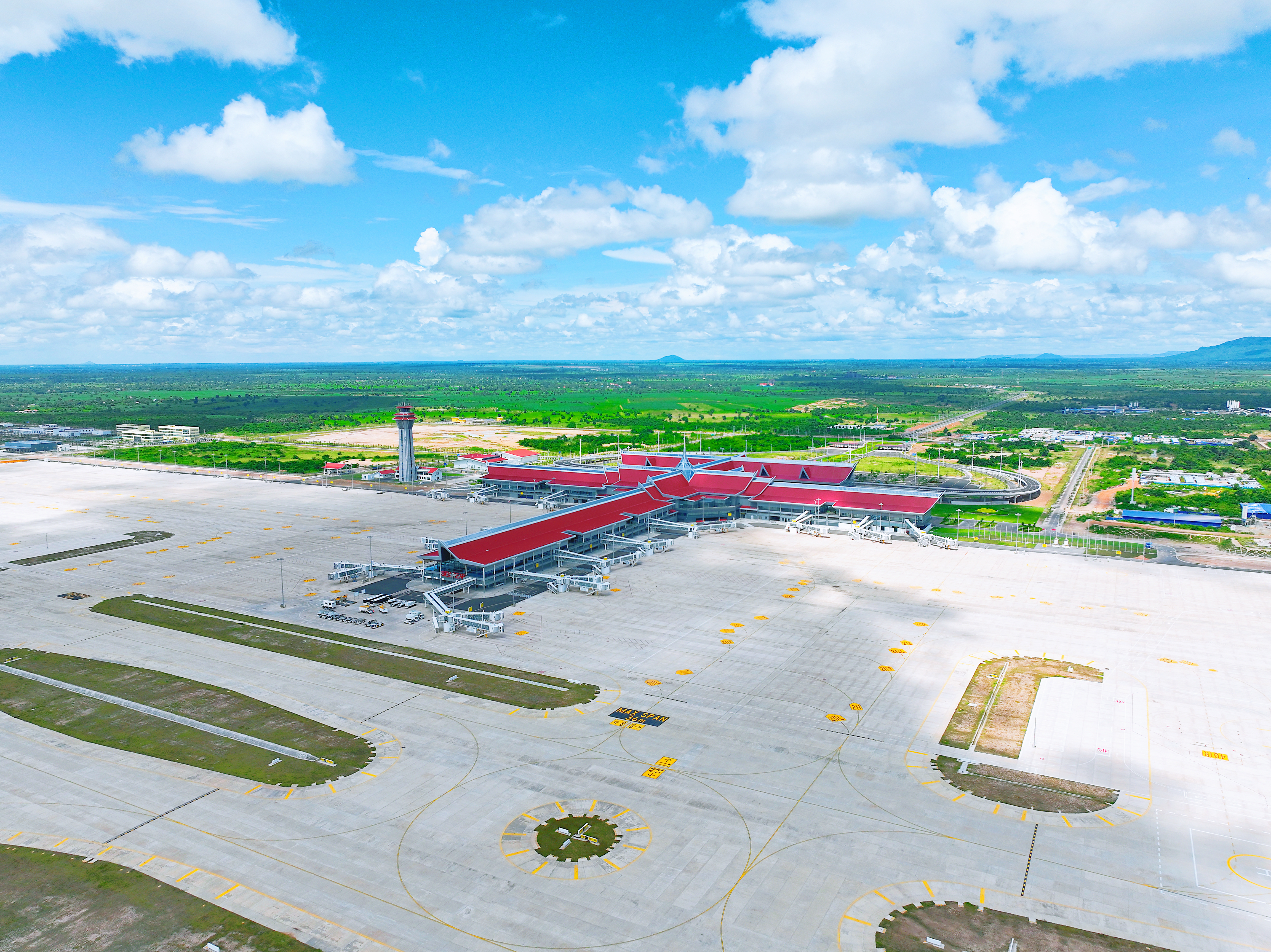
Siem Reap Angkor International Airport(SAI) is an important landmark project under China’s Belt and Road Initiative, as well as a key project of China-Cambodia production capacity cooperation. It is the first international airport project implemented by a Chinese enterprise overseas under the BOT model(build-operate-transfer). In September 2016, Angkor International Airport Investment (Cambodia) Co., Ltd. (AIAI) was incorporated in Cambodia. Funded by three enterprises from Yunnan Province(Yunnan Provincial Investment Holding Group Co., Ltd., Yunnan Construction and Investment Holding Group Co.,Ltd., and Yunnan Aviation Industry Investment Group Co., Ltd.), the company signed a 55-year BOT agreement with the Royal Government of Cambodia for the development and operation of the Siem Reap Angkor International Airport . Yunnan Airinvestment (Cambodia) Airport Management Co., Ltd. (YACA) — established in Cambodia on 29 August 2022 — is entirely entrusted by AIAI, established in Cambodia on 29 August 2022, is committed to providing SAI with premium operational and management services. YACA is a wholly-owned subsidiary of Yunnan Aviation Industry Investment Group Co., Ltd. , a large state-owned enterprise specializing in airport operation and management, planning and construction, tourism, logistics, commerce and architectural development.
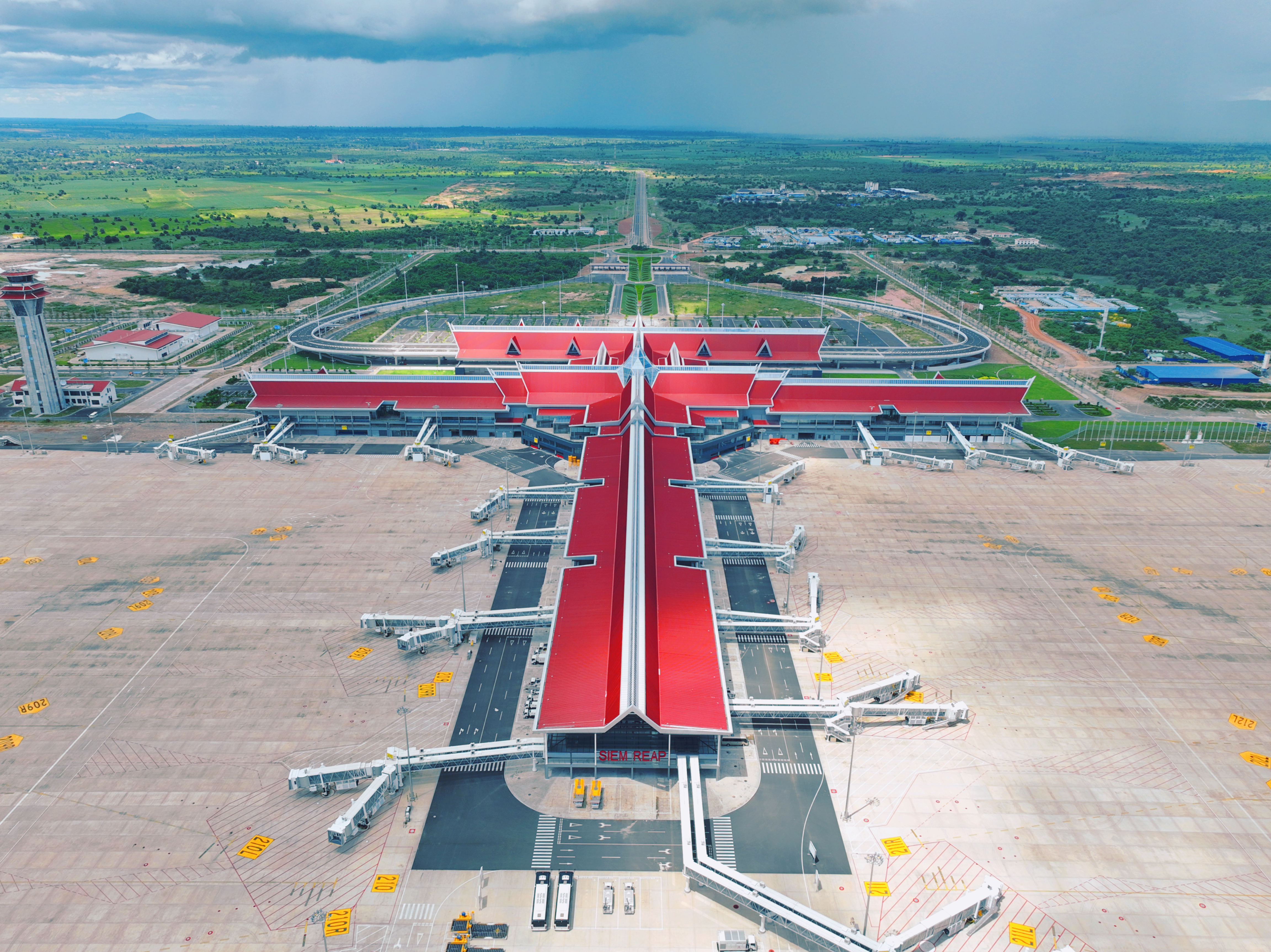
Since commencing operations on October 16, 2023, Siem Reap Angkor International Airport has become the second-largest international airport in Cambodia which covers an area of 700 hectares. The flight area is classified as Code 4E, capable of accommodating Code E aircraft such as the A340-600 and B747-400. The runway is 3,600 meters long and 45 meters wide. The airport is equipped with one parallel taxiway of the same length as the runway, four rapid exit taxiways and four perpendicular connecting taxiways. A total of 27 Code C and 11 Code E aircraft stands are planned for the apron.The terminal building has a floor area of 81,800 square meters and is designed to handle 7 million passengers annually.
II. Airport Development Plan
Siem Reap Angkor International Airport aims to exceed 7 million passengers, 10,000 tons of cargo, and 60,000 aircraft movements by 2035. By 2040, it strives to handle more than 10.2 million passengers, over 20,000 tons of cargo, and 86,000 aircraft movements.
Leveraging the geographical advantages of Siem Reap Angkor International Airport, it is committed to becoming a tourism aviation gateway in Southeast Asia, Priority will be given to expanding the international passenger market and to developing international cargo business by building regional air logistics corridors. Efforts will be made to cultivate key airlines and base carriers to ensure stable capacity supply, as well as specialized cargo airlines to build a distinctive cargo brand. By optimizing transfer procedures, improving service facilities and strengthening regional cooperation, Siem Reap Angkor Airport will be developed into an important node in the regional aviation network.
III. Operations Since Opening
In 2024, Siem Reap Angkor International Airport handled 15,200 flights, 1.4028 million passengers, and 102.3 tons of cargo.
In 2025, Siem Reap Angkor International Airport handled 15,200 flights; 1.478 million passengers; and 1,202 tons of cargo.
In terms of aviation business, the airport is currently served by 13 airlines, with routes covering 15 cities in 9 countries. These destinations include Kunming in China; Phnom Penh and Sihanoukville in Cambodia; Pakse and Luang Prabang in Laos; Kuala Lumpur in Malaysia; Singapore; Bangkok, including Don Mueang and Suvarnabhumi, and Phuket in Thailand; Ho Chi Minh City, Hanoi, Da Nang and Phu Quoc in Vietnam; Kolkata in India; and Dubai in the United Arab Emirates.
In terms of non-aeronautical business, the company has successfully introduced 33 brands and established 44 commercial outlets, covering a diversified range of businesses including catering, retail, duty-free, and advertising. These include internationally renowned brands such as China Duty Free, Starbucks and Newrest, as well as boutique stores featuring distinctive Cambodian local products.